



Updated: Aug 3
More than 1 billion people worldwide live with a mental health condition. Yet most of them never receive care. That gap between how many people struggle and how many get help is one of the defining public health challenges of our time. The single most powerful tool for closing it is also one of the simplest: awareness.
Mental health awareness isn't just about knowing the terms. It’s about building communities where people feel safe enough to speak up, seek help, and support one another. When communities understand mental health, everything shifts. Schools respond better to struggling students, and coworkers reach out after a hard week.
The Scale of the Problem Is Bigger Than Most People Realize
In the United States alone, about 23.4% of adults—roughly 61.5 million people—experienced a mental illness in 2024, according to SAMHSA's National Survey on Drug Use and Health. Among young adults aged 18 to 25, the rate climbs even higher, to 33.2%.
These conditions are not rare. They’re as common as diabetes or heart disease. Yet they carry a weight that physical illnesses often don’t: stigma. This stigma keeps people silent. It makes them believe their suffering is a personal failure rather than a medical reality. And it delays care by years, sometimes decades.
The economic cost reflects just how serious this is. Mental health conditions cost the U.S. economy an estimated $282 billion annually. Globally, anxiety and depression alone cost $1 trillion each year in lost productivity. These aren’t just human costs; they’re societal ones.
Why Community Is Central to Mental Health
There’s strong evidence that social connection protects mental health. Research shows that consistent engagement with peer networks and community support can reduce symptoms of depression and anxiety by 20 to 30%. Social belonging isn’t just a nice-to-have; it’s a biological need. Isolation, by contrast, is a stronger predictor of early death than smoking 15 cigarettes a day.
Communities set the conditions for how people feel—whether they are safe, seen, and supported. A neighborhood where mental health is spoken about openly is one where a parent notices warning signs in their child sooner. It’s where a friend feels able to say, “I’m not doing well.” It’s where a colleague gets support instead of judgment after a breakdown.
What Reducing Stigma Actually Looks Like
Stigma reduction isn’t about a single campaign or a week of social media posts. Research consistently shows that the most effective approach combines education with direct social contact—meaning real interaction with people who have lived experience of mental health challenges.
Programs like Mental Health First Aid train ordinary people—teachers, managers, parents, neighbors—to recognize the early signs of a mental health crisis and respond with confidence. The RAND Corporation's evaluation of community-driven programs found that such initiatives can reach 1 in 4 adults and 1 in 3 youth, significantly increasing both awareness and a sense of community connectedness.
What these programs have in common is that they treat mental health as a community responsibility, not just an individual one. They move the conversation from “What’s wrong with you?” to “What happened to you, and how can we help?”
Practical Steps Anyone Can Take
Awareness doesn’t require a degree or a platform. It starts with small, deliberate actions in everyday life.
Check in on people who seem withdrawn, not just those who openly ask for help.
Speak openly about your own mental health when you feel comfortable. Normalizing the conversation gives others permission to do the same.
Learn the difference between everyday stress and signs that someone may need professional support.
Push back, gently but clearly, when you hear mental illness used as a punchline or an insult.
Share credible resources. Crisis lines, community clinics, and peer support groups are often free or low-cost.
Workplaces can take this further by training managers to recognize burnout and distress, building mental health days into leave policies, and creating clear pathways to professional support. Schools can integrate age-appropriate mental health education into the curriculum from an early age.
Recovery Is Possible and Common
One of the most important things awareness can do is shift the narrative from hopelessness to possibility. About 66.9% of U.S. adults who recognized having a mental health issue consider themselves to be in recovery or recovered, according to 2024 data. That’s not a small number; it’s a majority.
Recovery looks different for everyone. For some, it means medication and therapy. For others, it means peer support, lifestyle changes, or simply having one trusted person to talk to. What makes recovery more likely, in almost every case, is connection. A community that doesn’t abandon people when they are at their lowest is one that sees more people find their way back.
A Shared Responsibility
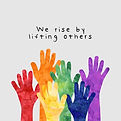
Mental health awareness is not the responsibility of clinicians and researchers alone. It belongs to all of us. Every school, workplace, place of worship, sports club, and neighborhood has a role to play in building an environment where mental health is taken seriously and people feel safe asking for help.
The numbers are significant, but they’re made up of individuals—friends, siblings, coworkers, and neighbors who are carrying more than they let on. Awareness, real awareness, means seeing them. Believing them when they speak. And knowing enough to point them toward help when they need it most.
The goal isn’t a community where no one struggles. It’s a community where no one struggles alone.
Resources for Support
If you or someone you know is in crisis, contact the 988 Suicide and Crisis Lifeline by calling or texting 988. Additional support is available through NAMI (National Alliance on Mental Illness) at nami.org and the Crisis Text Line by texting HOME to 741741.
This post is intended for informational purposes only and does not constitute medical advice. If you are experiencing a mental health emergency, please contact a qualified healthcare professional or emergency services.
Conclusion: Together, We Can Make a Difference
In the end, mental health awareness is about connection. It’s about creating spaces where we can share our stories and support each other. So let’s keep the conversation going. Let’s break the stigma and build a community where everyone feels valued and understood. Remember, recovery is possible, and together, we can make a difference! 💪✨


Comments